
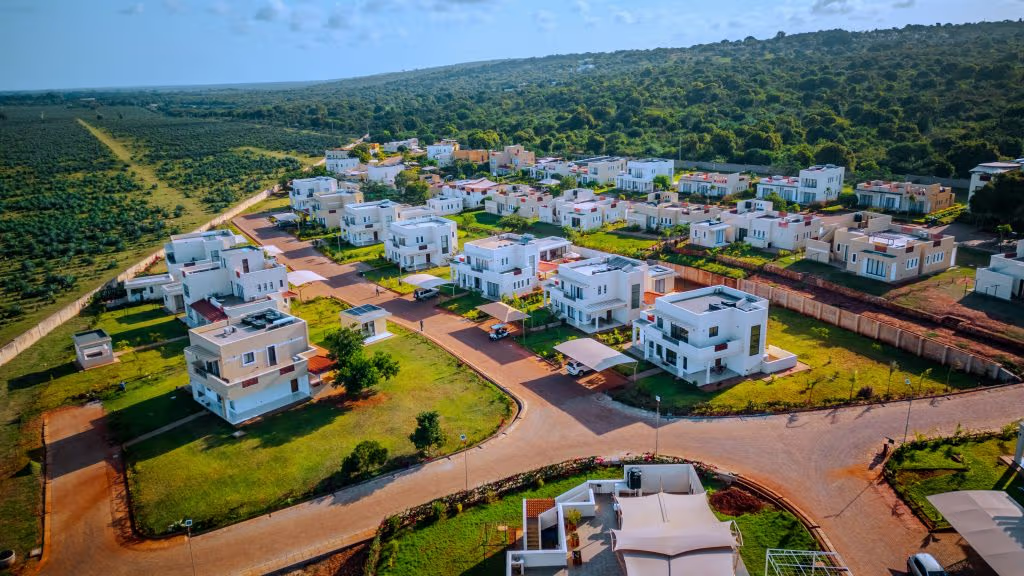
In the fast-paced world of Kenyan real estate, the old adage remains true: “Location, location, location.” But in 2026, we have a more refined version of that rule: “Follow the infrastructure.”
As the Nairobi Metropolitan region and secondary cities across the country undergo a massive transformation, savvy investors are no longer just looking for land; they are looking for connectivity. Infrastructure projects—ranging from expansive bypasses and BRT corridors to airport upgrades and special economic zones—are the primary catalysts for property value appreciation.
At Urban Nexus Realty, we analyze these shifts to help our clients identify where the next wave of wealth will be created. If you are hunting for value property that offers both long-term stability and high capital gains, here are the infrastructure corridors and towns you need to watch.
1. The Power of Road Connectivity: Satellite Towns Redefined
Roads are the arteries of urban growth. Historically, the completion of the Thika Superhighway turned once-sleepy areas into bustling residential hubs. Today, the impact is being repeated in several key zones:
The Northern and Southern Bypasses
The expansion and upgrades of the Northern and Southern Bypasses have created a “golden loop” around Nairobi.
- Target Towns: Ruaka, Ruiru, Kikuyu, and Ngong.
- The Investment Logic: Improved road networks cut commute times significantly. When you can reach major business nodes like Westlands or Upper Hill from a peaceful residential town in under 45 minutes, property demand skyrockets. Whether you are looking for properties for sale in these areas or exploring potential properties for rent for your portfolio, these towns offer the best balance of affordability and accessibility.
The Nairobi Expressway and Interchange Expansion
The ongoing optimization of interchanges along the Nairobi Expressway continues to influence land values in Syokimau and Mlolongo. The ability to bypass Mombasa Road traffic is a “premium feature” that tenants and buyers are willing to pay for.
2. Emerging Logistics and Industrial Hubs
Infrastructure is not just about moving people; it is about moving goods. Towns that benefit from proximity to major transport infrastructure—such as airports and railways—are becoming prime spots for commercial and industrial investment.
- Syokimau & Athi River: With the continued development around the Jomo Kenyatta International Airport (JKIA) and the Standard Gauge Railway (SGR) freight corridors, these towns are attracting logistics companies. This, in turn, drives demand for high-density housing for the workforce.
- Dongo Kundu (Coast Region): As the Special Economic Zone (SEZ) at the Coast makes progress, the area surrounding it is slated for massive appreciation. For investors looking beyond Nairobi, this is the region to watch for industrial and trade-linked residential developments.
3. The “Silicon Savannah” Effect: Konza and Beyond
Infrastructure projects are also diversifying to include tech and energy. Konza Technopolis remains a long-term play, but the surrounding areas in Machakos and Kajiado counties are already seeing the ripple effects of infrastructure spending on utilities, power, and connectivity.
- Why it works: When the government commits to a tech hub, they also invest in massive water, sewer, and road systems. Investing early in these areas allows you to benefit from the “early-bird” land prices before the area reaches full maturity.
4. How to Evaluate an Infrastructure Project Before Buying
Not every project guarantees appreciation. At Urban Nexus Realty, our agents often advise clients to look for specific “Value Indicators”:
- Project Maturity: Is the project in the planning stage, under construction, or nearing completion? Properties often see the sharpest jump in value when infrastructure is confirmed or nearing completion.
- Overlapping Upgrades: Areas that benefit from multiple projects—such as a new road and improved water/sewerage connections—almost always outperform areas with single-project benefits.
- Zoning Trends: Check whether the local government is rezoning the area for higher density. A shift from “single-dwelling” to “multi-dwelling” zoning is a massive signal for developers and investors.
Your Next Steps: Building a Wealth-Generating Portfolio
Infrastructure is the “secret sauce” of successful real estate investing in Kenya. By positioning yourself in the path of growth, you are essentially letting government development plans do the heavy lifting for your investment’s appreciation.
Partnering with Professionals
The real estate market can be complex, especially when dealing with land in developing areas. You need to verify:
- Title authenticity.
- Future infrastructure plans (to ensure your property won’t be in the way of a planned road expansion).
- Accessibility to social amenities.
If you are ready to explore the market, browse our latest value property listings or reach out to our expert team for a personalized market analysis. We help you cut through the hype and focus on the data-backed opportunities that will define the next decade of Kenyan real estate.
Conclusion: Don’t Wait for the Dust to Settle
The best time to buy is when the infrastructure project is visible, but the neighborhood has not yet reached its peak density. As Nairobi and other major towns in Kenya continue to expand, these infrastructure-led growth corridors are where your capital will find its highest returns.
Contact Urban Nexus Realty today, and let’s secure your future in Kenya’s most promising real estate hotspots.


Join The Discussion