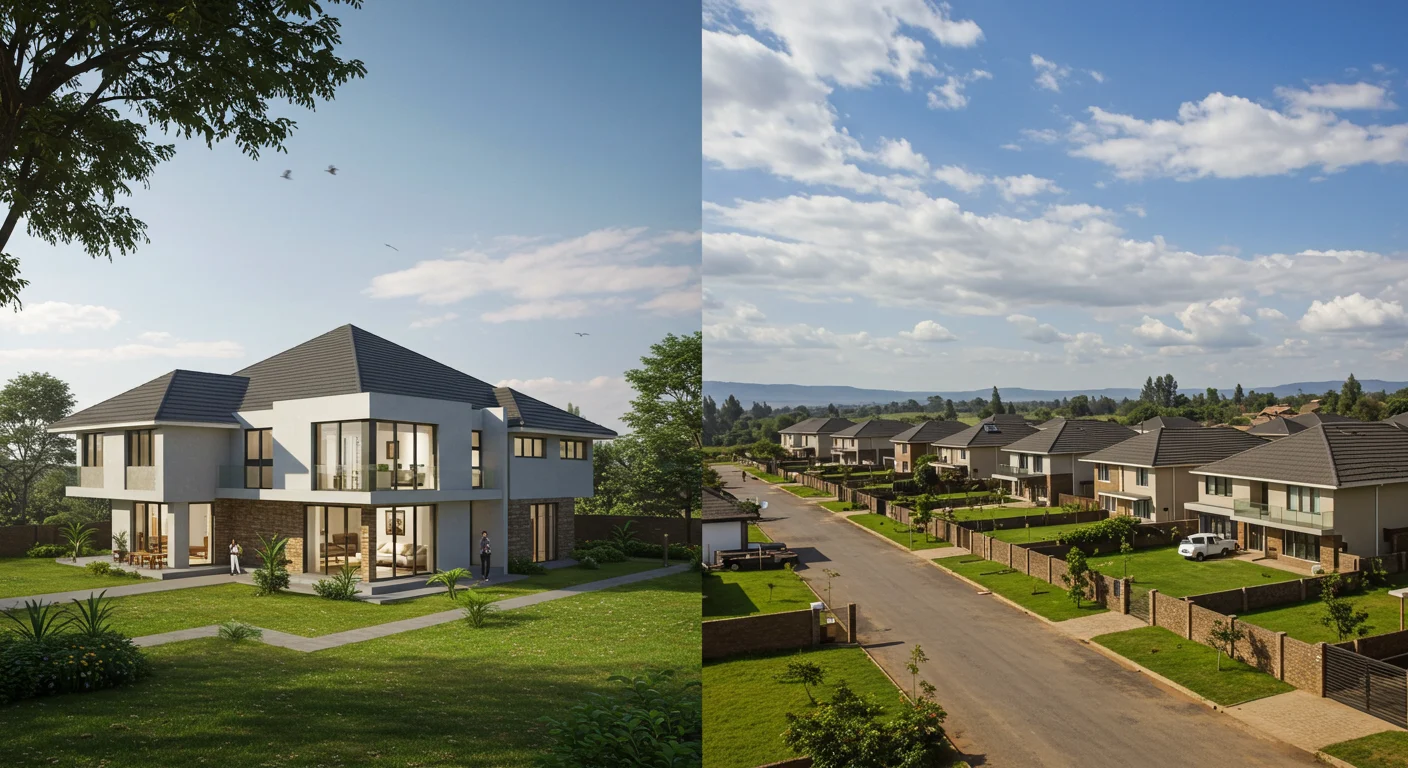
For many Kenyans, the choice between a home in a gated community and a standalone house is not merely about floor plans or square footage; it is a fundamental decision about lifestyle, security, and long-term asset strategy. As we navigate the real estate landscape of 2026, this debate has gained new intensity. With Nairobi’s urban sprawl pushing further into satellite towns, buyers are weighing the convenience and security of estates against the autonomy and land-value potential of standalone homes.
Whether you are scouting for a value property to add to your portfolio or searching for a property for sale to house your family, understanding the trade-offs is essential for a sound investment.
The Rise of Gated Communities: Why They Dominate the 2026 Market
In 2026, gated communities have become the “default” choice for the middle-to-high-income bracket. Their dominance is driven by a shift in buyer psychology where security and “plug-and-play” infrastructure have become non-negotiable.
The Investment Case for Gated Estates
- Predictable Appreciation: Properties within well-managed estates tend to appreciate more uniformly. Because the estate’s overall aesthetic, landscaping, and infrastructure are maintained by a management company, individual property values are shielded from the “neighborhood decay” that can sometimes affect standalone homes in unplanned areas.
- Security as a Baseline: In the current climate, security is the primary driver of property value. Gated estates offer multi-layered security—controlled access, 24/7 guards, CCTV, and perimeter systems—that a standalone homeowner would struggle to replicate at an affordable cost.
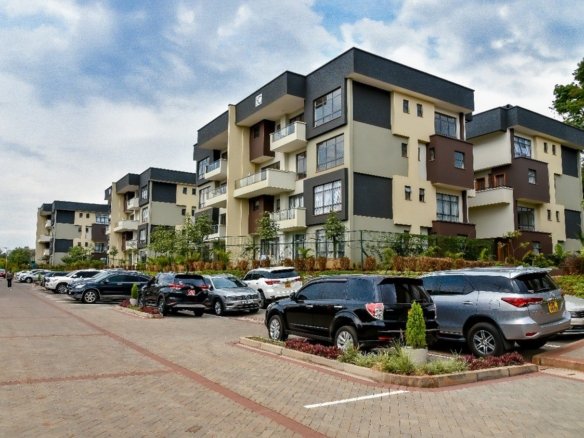
- Lifestyle Ecosystems: Modern estates function as “15-minute cities.” With on-site gyms, playgrounds, boreholes, and high-speed internet, they appeal to the busy professional. For those looking at “buy-to-let” investments, these amenities make your unit significantly easier to list as a property for rent because they satisfy the modern tenant’s demand for convenience.
The Trade-offs
- Service Charges: This is a perpetual cost. Owners must pay monthly levies for maintenance, security, and cleaning. Over two decades, these fees can represent a significant portion of your investment.
- Restrictive Covenants: You don’t have total freedom. Most estates have strict rules regarding renovations, pet ownership, noise, and even the color of your curtains.
- Density: As land in Nairobi becomes scarcer, gated communities are becoming denser. You may find yourself with less garden space and less privacy compared to a standalone plot.
The Standalone House: The Bastion of Freedom
While estates offer convenience, standalone houses represent the ultimate form of property ownership: total autonomy.
The Investment Case for Standalone Homes
- Land Value Maximization: When you buy a standalone house, you usually own the land in its entirety. In growing areas where land prices are surging, the “land component” of your investment will often appreciate faster than the building itself.
- Unlimited Autonomy: You have full control over your property. You can renovate, expand, install solar systems, or repurpose the space without needing approval from a body corporate or homeowners’ association.
- Lower Ongoing Costs: Once the initial investment is made, you aren’t beholden to recurring service charges. You manage your own maintenance, which allows you to control your costs.
The Trade-offs
- Security Burden: As a standalone homeowner, you are your own security manager. Installing electric fences, hiring guards, and managing alarm systems is a hands-on responsibility.
- Infrastructure Risks: Standalone houses—especially in peri-urban areas—often rely on public infrastructure that may be inconsistent. If you don’t have an on-site borehole or a robust power backup system, you are vulnerable to municipal service failures.
- Resale Volatility: Unlike a house in a well-branded estate, the value of a standalone home is heavily tied to the neighborhood’s fortunes. If the area becomes noisy, industrial, or poorly maintained, your property’s value can suffer.
Comparative Investment Profile
| Feature | Gated Community | Standalone House |
| Asset Type | Managed Lifestyle | Tangible Land Control |
| Resale Speed | Fast (High market demand) | Moderate (Requires niche buyer) |
| Maintenance | Outsourced (Service charge) | DIY (Full control) |
| Security | Institutional (High) | Personal (Variable) |
| Investment Goal | Passive income/Value stability | Capital appreciation/Development |
Which Path Should You Choose in 2026?
The decision should ultimately align with your investment horizon and risk profile.
- Choose a Gated Community if: You are looking for a “lock-and-leave” property, you are an investor prioritizing steady rental yields, or you value security and shared amenities above all else. These properties are the gold standard for most real estate agencies recommending low-stress assets to clients.
- Choose a Standalone House if: You are a long-term investor who believes in the appreciation of the land itself, you value privacy, or you are looking for a custom home that you can expand or modify over the coming decades.
How Urban Nexus Realty Can Help
Whether you decide that the estate lifestyle is for you or that the autonomy of a standalone house is the better fit for your future, our team is equipped to help you identify the right opportunity.
- Neighborhood Insight: Our agents have deep knowledge of which satellite towns and Nairobi suburbs are trending toward estate-led growth versus those where standalone land is primed for value appreciation.
- Vetted Listings: We curate a selection of high-value property options that have been thoroughly checked for legal compliance and infrastructure quality.
- Support: From managing your investment to helping you navigate the complexities of property taxes and maintenance, we are your partner in real estate.
Still debating which investment route to take?
Contact our professional team today. Let us discuss your financial goals and help you find the property that fits perfectly into your 2026 investment portfolio.
Your property, our priority—at Urban Nexus Realty.



Join The Discussion