

Nairobi is undergoing a quiet, fundamental transformation. For years, the city’s real estate narrative was dominated by high-density developments in the urban core—apartments piling up in Kilimani, Westlands, and Upper Hill. But as we move deeper into 2026, the data tells a different story. A “Great Migration” is underway, as families, young professionals, and even high-net-worth investors pivot toward the periphery.
This shift isn’t just a lifestyle preference; it is a profound economic movement that is recalibrating property values across the Nairobi Metropolitan Area. If you are holding a value property or considering where to deploy your next investment, understanding the mechanics of this suburban pivot is essential.
1. The Bifurcation of the Market: Houses vs. Apartments
The 2026 property market is split into two distinct tracks. On one hand, standalone houses in established suburbs like Lavington, Karen, and Spring Valley are seeing strong appreciation—growing by over 4% quarterly in some cases. On the other hand, the apartment segment in central business districts is facing an oversupply correction.
- The Scarcity Factor: In prime suburbs, the supply of standalone houses is structurally limited by land availability and zoning laws. As demand for spacious, low-density living increases, these properties are becoming “trophy assets” that hold their value tenaciously.
- The Oversupply Correction: Conversely, years of aggressive high-rise development in hubs like Westlands have led to a surplus of units. This oversupply is putting downward pressure on prices in those specific nodes, forcing developers and investors to reassess their strategy.
2. Infrastructure: The Engine of Decentralization
The “Suburban Shift” would be impossible without the massive infrastructure projects of the last few years. The Nairobi Expressway, the expansion of the Northern and Southern Bypasses, and the improved connectivity to the Thika Superhighway have effectively “compressed” the city.
Areas that were once considered “too far” are now integrated into the daily commute. This infrastructure-led uplift has shifted the desirability index. When a bypass cuts a two-hour crawl to a 30-minute drive, land in satellite towns like Ruiru, Syokimau, and Ngong becomes exponentially more valuable.
Key Trend: Infrastructure has moved from being a luxury to a baseline requirement. Investors are now filtering everyproperty for salethrough the lens of road accessibility and reliable connectivity.
3. Why the Middle Class is Voting with Their Feet
For the average professional, the appeal of the suburbs and satellite towns is simple: Value for money.
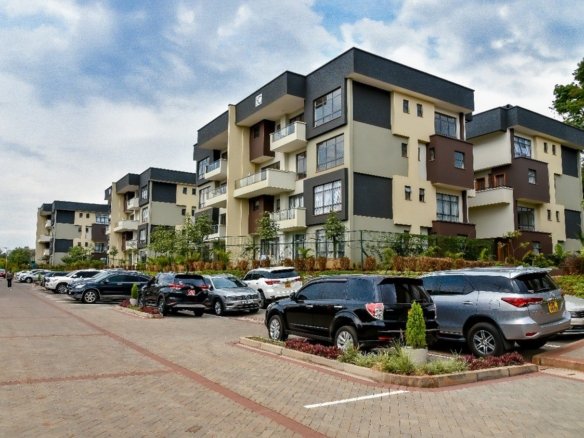
- Space & Serenity: In the city, you pay a premium for square footage. In the suburbs, that same budget secures a compound, a garden, and the privacy of a gated community.
- Self-Sustaining Hubs: Nairobi’s satellite towns are no longer just “bedroom communities.” They are evolving into self-contained urban centers with their own schools, shopping malls, and hospitals. Residents no longer need to travel into the city center for every errand, which increases the long-term desirability of these locations.
- The Rental Resilience: While high-end corporate leasing in the city center has softened due to a “wait-and-see” approach by multinationals, the demand for family-friendly rentals in secure gated communities remains robust. Investors are seeing stable yields in these areas, making them a safer bet for long-term income generation.
4. How to Navigate This New Landscape
The shift to suburban living means that “location” now carries a different meaning than it did five years ago. Investors need to be more surgical in their approach.
For the Investor:
- Focus on Gated Communities: Safety and standardized management are paramount. Developments that offer integrated amenities—security, water, and green space—are outperforming isolated plots.
- Look for “Emerging” Value: While prime suburbs are seeing steady growth, the highest percentage appreciation is often found in corridors where infrastructure is still in the “maturation” phase (areas just beyond the current outer bypasses).
For the Tenant/Homebuyer:
- Assess the “Commute-Life” Balance: Use the current infrastructure as your guide. If you are looking for a property for rent, prioritize units with proximity to the latest arterial road networks.
Partnering with Urban Nexus Realty
Whether you are an investor looking to pivot your portfolio toward detached suburban assets or a homeowner looking to maximize the value of your property, the current market requires expert navigation.
Our agents track the micro-trends that move property values—from zoning changes in Lavington to infrastructure progress in Kiambu. We help our clients move beyond the noise of the general market and focus on the data that matters.
- Agencies: We leverage deep market data to help you identify the best-performing agencies and investment vehicles for your specific budget.
- Strategic Advisory: We don’t just facilitate transactions; we provide the insight needed to ensure your investment grows alongside the city’s expansion.
Ready to capitalize on the shift?
Nairobi’s real estate story is changing. Don’t let your strategy be stuck in the past. Contact Urban Nexus Realty today for a personalized consultation on how to align your property investments with the evolving landscape of 2026. Let’s find the right move for your future.


Join The Discussion