
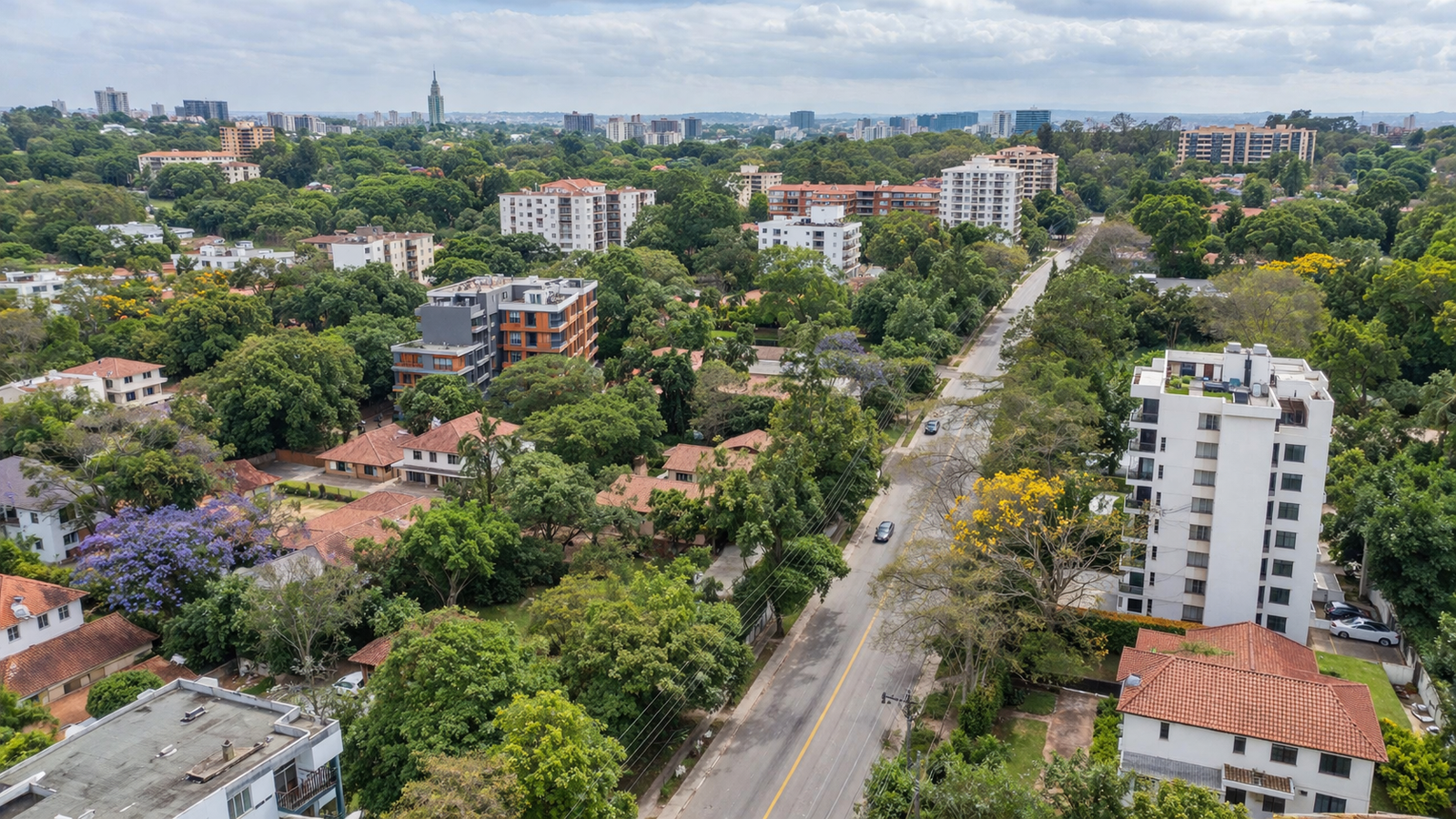
For the Nairobi investor in 2026, the choice between Kilimani and Lavington is no longer just about “location, location, location.” It has become a strategic decision between two distinct asset classes: the high-liquidity, high-density apartment market of Kilimani and the scarcity-driven, family-oriented residential market of Lavington.
As of Q1 2026, market data shows a maturing environment where simple “area appreciation” is fading. Instead, investors are finding that returns are driven by building management, unit type, and precise tenant demographics.
1. The Market Profile: Kilimani vs. Lavington
| Metric | Kilimani | Lavington |
| Primary Asset | High-density apartments | Townhouses, gated homes, & villas |
| Tenant Profile | Young professionals, digital nomads, short-term renters | Families, senior professionals, expatriates |
| Market Driver | Urban convenience, nightlife, proximity to CBD/Upper Hill | Privacy, security, school proximity, low density |
| Gross Rental Yield | 6.0% – 7.5% | 5.0% – 6.5% |
| Market Liquidity | High (frequent turnover) | Moderate (stable, long-term tenants) |
2. Kilimani: The Yield Leader
Kilimani remains the “engine room” for investors seeking active, income-generating assets. Its appeal is anchored by an urban lifestyle that attracts the city’s most mobile and transient tenant population.
- Why It Delivers Yield: Kilimani is characterized by intense demand for smaller unit sizes (studios and 1-2 bedrooms). These units are easier to rent out and manage, making them perfect for those seeking to maximize rental income per square foot. The area has a thriving Airbnb and short-term rental market, which can often push net yields well above the long-term rental average.
- The Investment Risk: The “Oversupply Trap.” Developers have been aggressive in Kilimani. You are competing with hundreds of similar units in the same zip code. Investors must be highly selective—buying in a building with poor management or aging amenities in Kilimani can lead to vacancy rates exceeding 25%.
- Best Strategy: Focus on Building Quality. Target newer, well-managed apartments with modern amenities (backup power, fast internet, smart security). The “address” is no longer enough; the building’s internal reputation is the primary determinant of your occupancy rate.
3. Lavington: The Stability Play
Lavington appeals to a different investor mindset: one focused on capital preservation and long-term stability.
- Why It Offers Value: Lavington has experienced “controlled development” due to strict zoning and community resistance to high-density buildings. This scarcity of new apartment stock acts as a natural floor for your property value. Lavington’s rental market is dominated by families and senior professionals who stay for years, reducing your turnover costs and vacancy periods.
- The Apartment Correction: While Lavington’s standalone houses and townhouses saw significant price growth (+12.7% YoY in early 2026), its apartment segment has seen price corrections of -6.4% in some pockets. Investors who bought into Lavington apartments at the peak of the market are now seeing yield compression.
- Best Strategy: Target Townhouses or larger family-sized units. The data is clear: scarcity drives the Lavington market. A 3-bedroom townhouse in a gated, well-managed compound is significantly more liquid and resilient than a standard 2-bedroom apartment.
4. How to Choose Based on Your Goals
Choose Kilimani If:
- Your focus is cash flow: You want a property that works hard, potentially as a short-stay or mid-term rental.
- You prioritize liquidity: You need the ability to find a tenant within weeks.
- You have a smaller budget: Kilimani offers a lower “entry price” through smaller unit footprints.
Choose Lavington If:
- Your focus is capital preservation: You want an asset that will reliably appreciate over 5–10 years.
- You prefer stability: You don’t want to deal with constant tenant turnover or the management overhead of an Airbnb-style unit.
- You are seeking a family-oriented asset: You are looking at townhouses or larger units that cater to families and long-term professional tenants.
Final Verdict: Building Beats Neighborhood
In 2026, the “neighborhood effect” is diminishing. An average apartment in a poorly managed building in Kilimani will underperform a well-managed unit in a secondary location.
Before you commit, ensure you are not just buying an address. Use a Property Scoring Card to evaluate your potential unit based on:
- Management: Who runs the building? Are there clear rules on maintenance?
- Vacancy Rates: Ask local agents for the actual occupancy levels in the building, not just the brochure figures.
- Entry Price: Are you buying at a price that reflects the current, more realistic rental market?
If you are currently evaluating your options, we invite you to browse our curated value property listings or property for sale database, which features buildings vetted for management quality and long-term ROI.
Ready to calculate the true yield of your next potential purchase?
Contact our professional team today. Our experts, alongside our network of top-tier real estate agencies, can help you analyze the “net yield” of specific units, ensuring your investment is backed by data, not just hype.
Your property, our priority—at Urban Nexus Realty.



Join The Discussion